
Case File No. 01: The landlord said no to the dog
Harrison & Co Case Files is a fortnightly case study from LETiQ. Each issue puts you behind the desk at Harrison & Co, our fictional agency, with a real problem, the law that governs it, and what a good agent does next.
Since 1 May, every private tenant in England has had the right to ask for a pet. Most agents know that much. Far fewer know the deadlines, or what to do when a head lease gets in the way. Here's a case with both.
The case
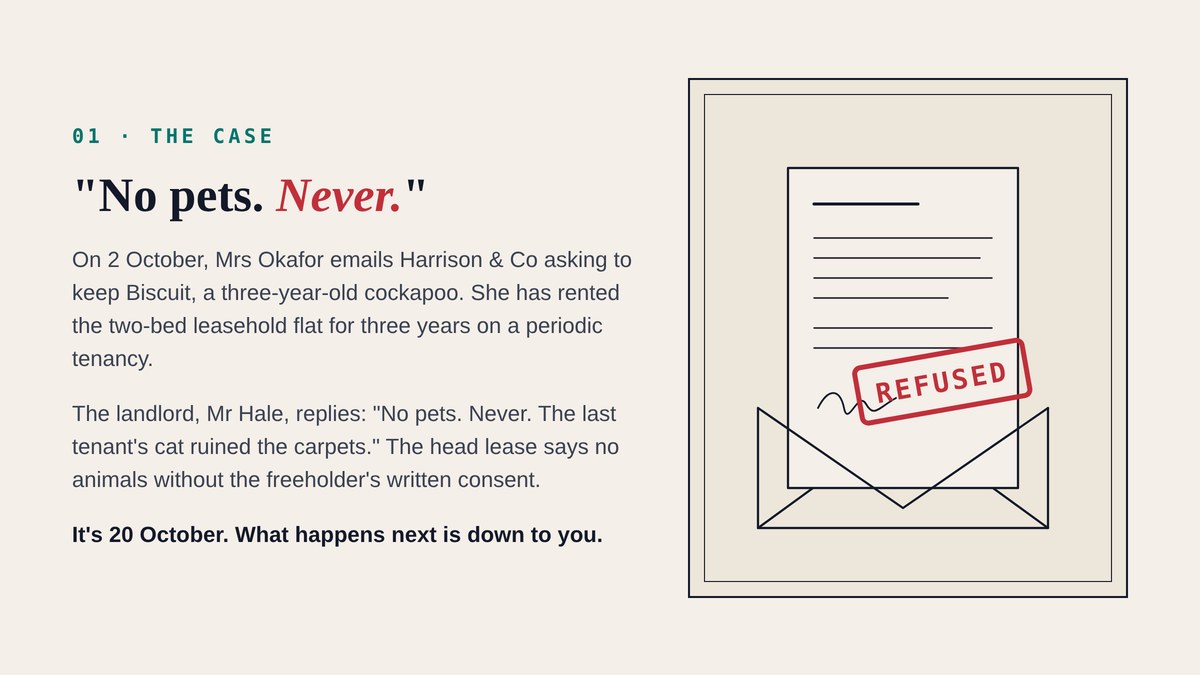
Mrs Okafor has rented a flat through Harrison & Co for three years. On 2 October she emails asking to keep Biscuit, her three-year-old cockapoo.
Mr Hale, the landlord, replies in one line: "No pets. Never. The last tenant's cat ruined the carpets."
Then you pull the file. The flat is leasehold, and the head lease says no animals without the freeholder's written consent. Nobody has asked the freeholder anything. It's now 20 October.
Your move
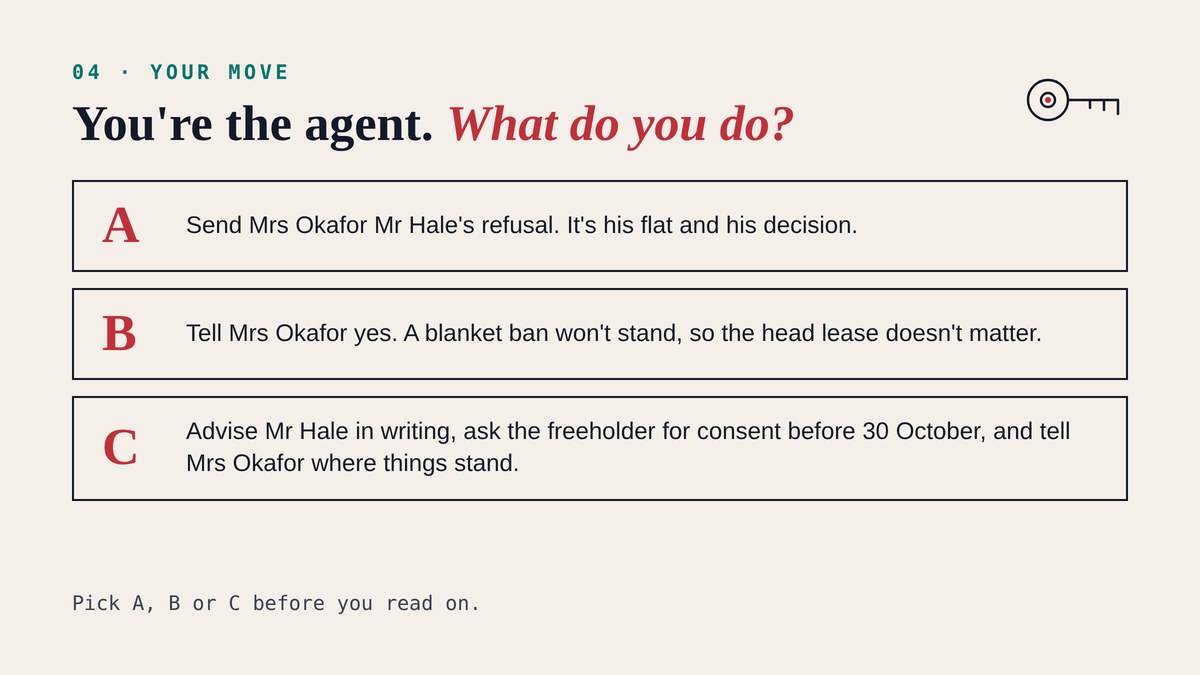
Three options, and each has a plausible pull. Which would you pick? Settle on A, B or C before you read on.
What the law says
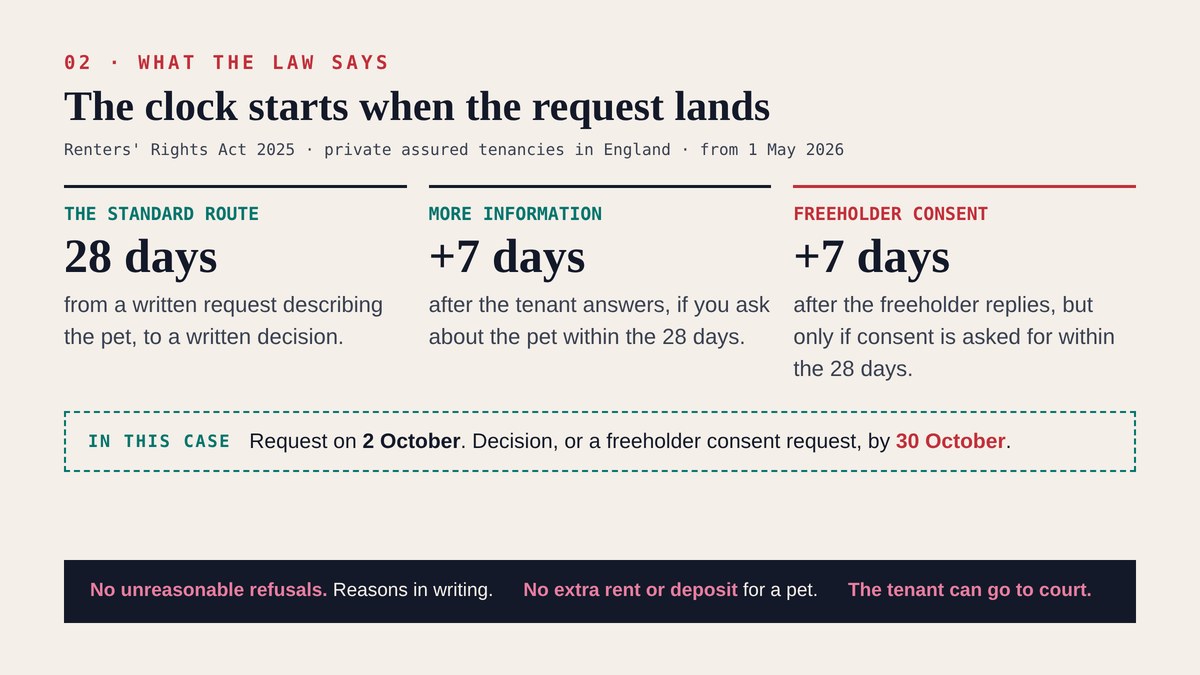
The detail that catches agents out is the last column. The freeholder extension only counts if consent is asked for within the 28 days. Leave it until day 29 and Mr Hale is already out of time.
One more thing worth knowing. A tenant who gets an unreasonable refusal, or no answer at all, can take it to the county court.
Reasonable or not?
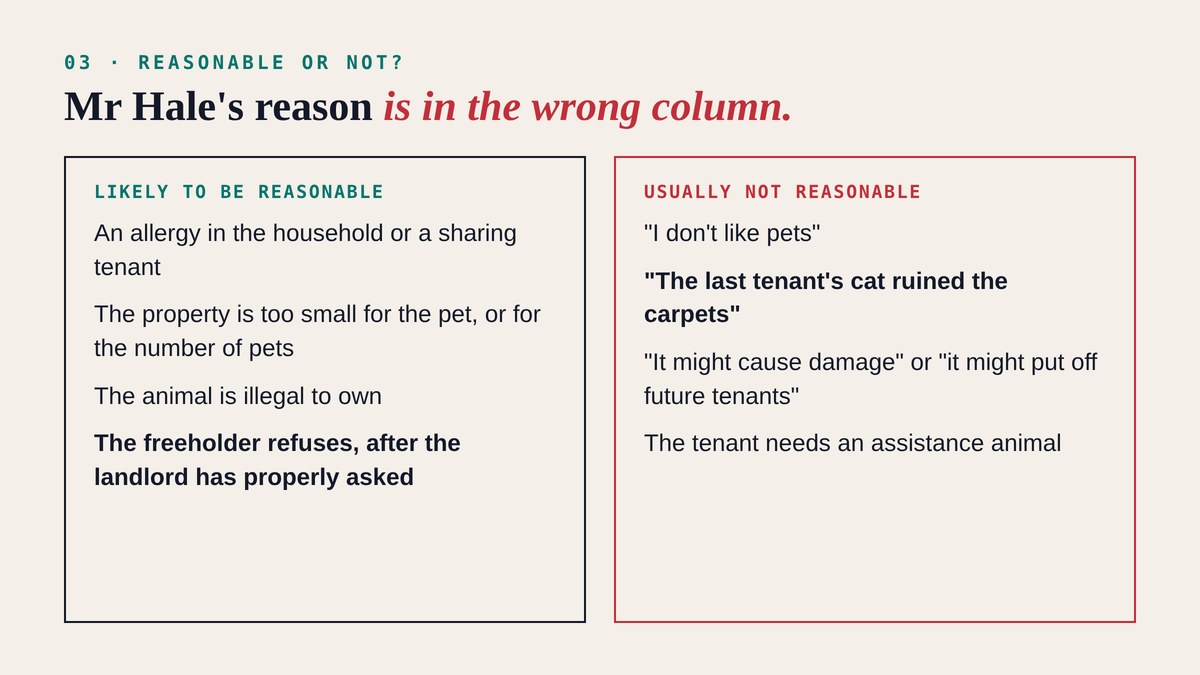
Government guidance gives examples rather than a list, but the pattern is clear. A good reason is about this pet, this property or this lease. Never about the last tenant.
So Mr Hale's reason won't hold. The head lease, though, could be a perfectly good one, if the freeholder says no.
What the agent must do
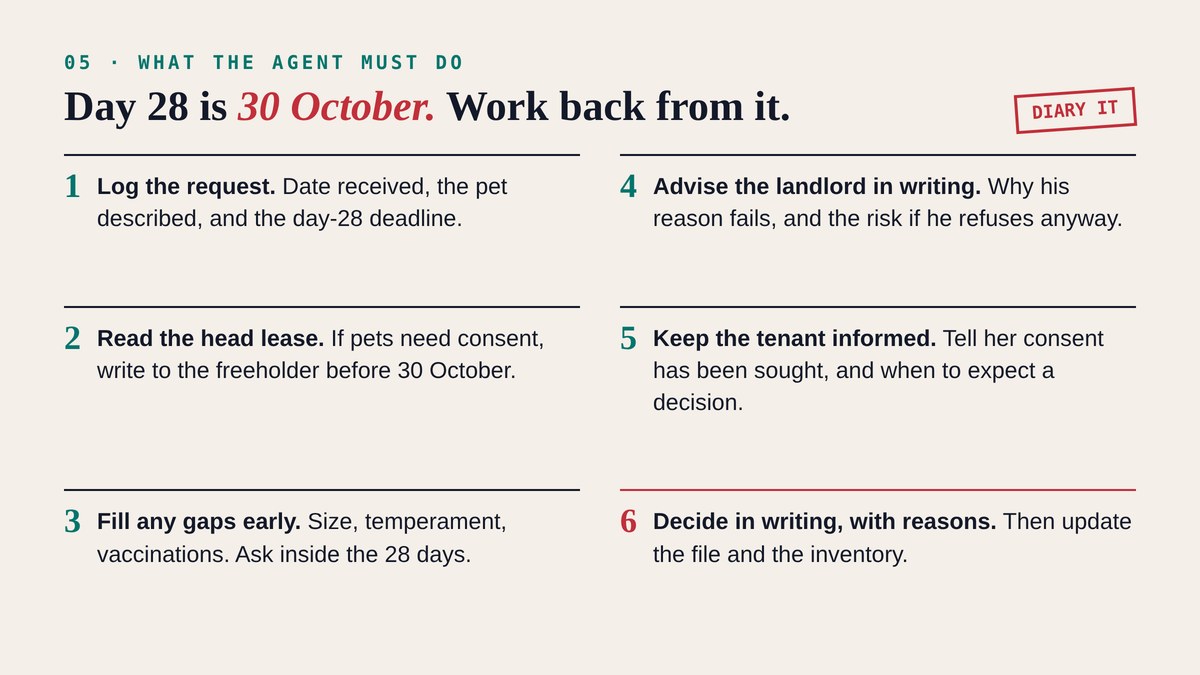
Six steps, and every one leaves a paper trail. That's the point. If Mrs Okafor ends up in court, your file is the agency's evidence that it did its job.
Advising your landlord
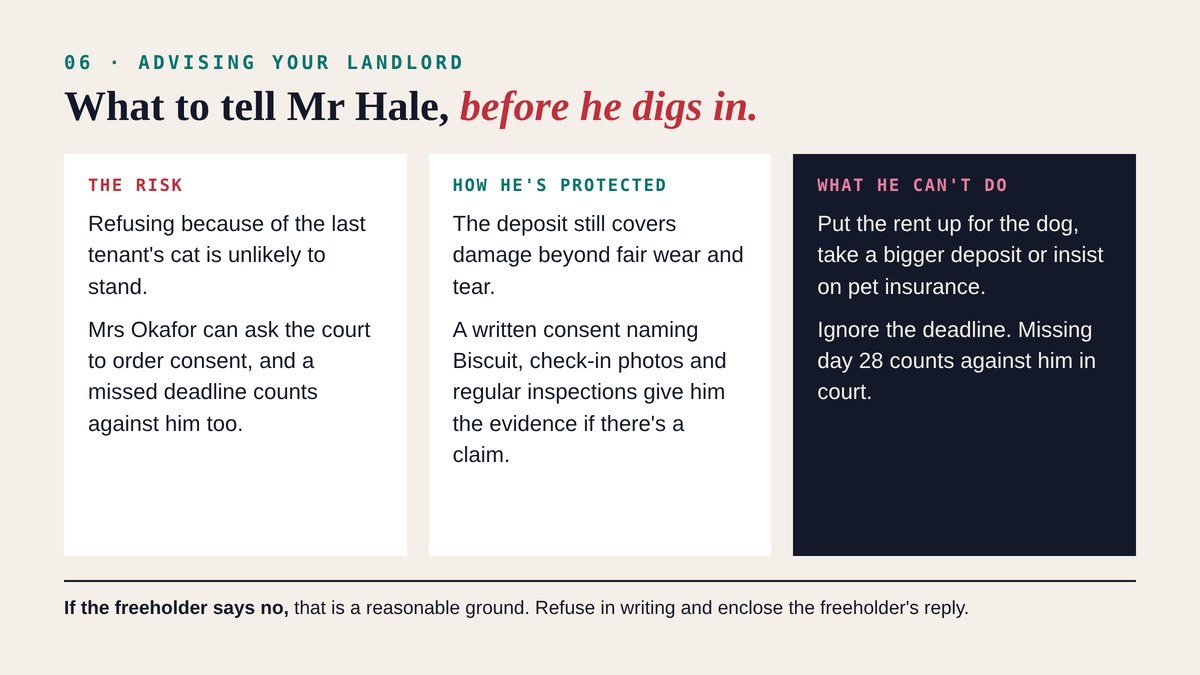
Mr Hale isn't being difficult for the sake of it. He's been burnt before. Start with what worries him, then explain where the law now sits: his reason won't hold, the deposit still protects him, and digging in risks a court order.
If the freeholder does refuse, that's his answer. Refuse in writing and enclose the freeholder's reply.
Case closed
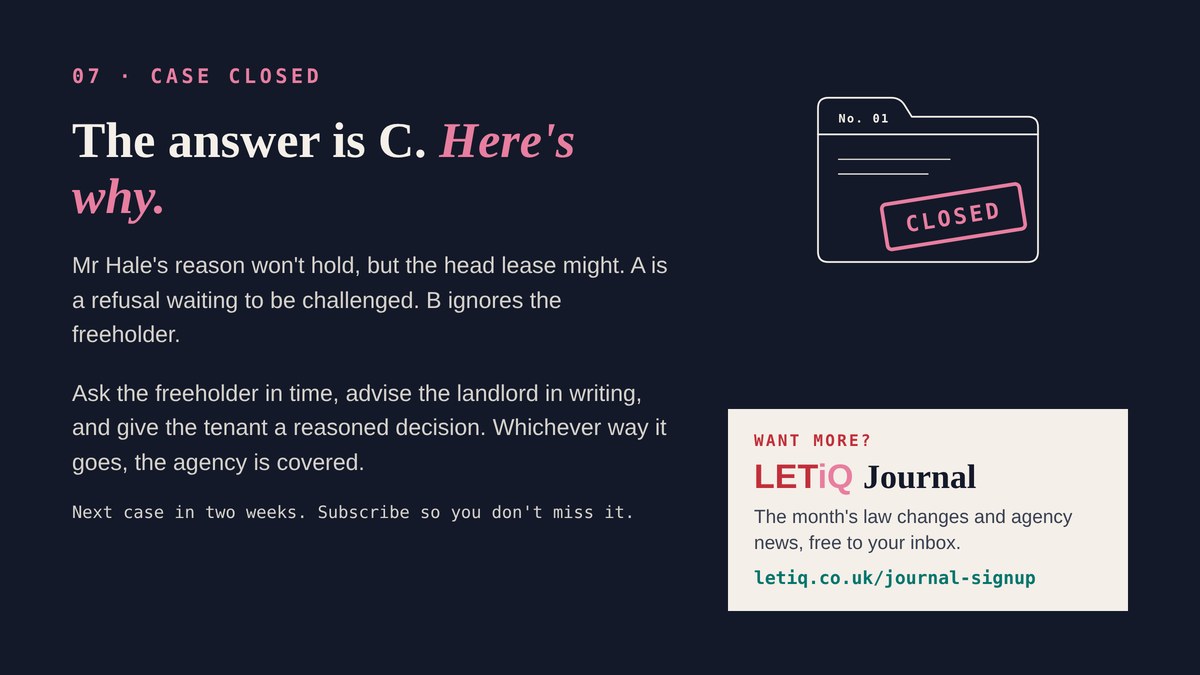
The answer is C.
A leaves your client exposed. B could put him in breach of his own lease. C deals with both, and covers the agency whichever way the freeholder answers.
The bigger lesson? Under the new rules, the deadline is usually the first thing to go wrong, long before anyone argues about the dog.
Over to you
Did you pick C? And has a pet request landed on your desk since May? Tell me how it went on LinkedIn.
The next Case File lands on Friday 20 November. Sign up below and it comes to you.
Cases like this are the heart of the Propertymark Qualifications Level 3 Certificate in Property Agency. Our next open cohort starts on Tuesday 19 January 2027, taught live on Zoom. If you'd like to get qualified, or get your team there, see the January cohort or book a discovery call.
Claudia Brown FARLA, LETiQ
Harrison & Co is a fictional agency, and Mrs Okafor, Mr Hale and Biscuit are invented. This article is general information on the law in England as at 25 October 2026, not legal advice.
Sources
Free: the PRS Database checklist for your landlords
Every deadline by region, what each landlord needs ready, and a registration record for each property. Sign up to the LETiQ Journal and it's yours straight away.